“This nomination also recognizes the many unseen moments that define music teaching...the rehearsals…the constant advocacy…”: Lynn Harper
February 20, 2026
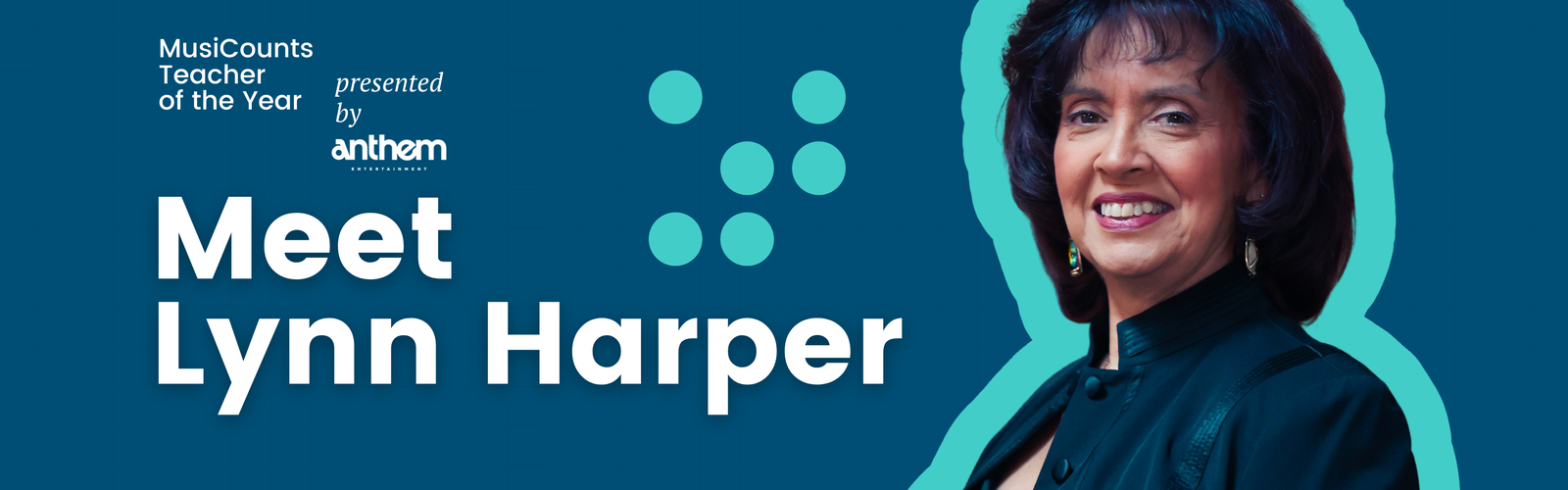
Meet the second of our 2026 MusiCounts Teacher of the Year nominees — Lynn Harper from Chateauguay Valley Regional High School in Ormstown, QC.
The MusiCounts Teacher of the Year Award, presented by Anthem Entertainment, recognizes and honours exceptional Canadian music teachers annually.
Tune in to The 2026 JUNO Awards on Sunday, March 29 where the winner will be announced, and on our website & social media platforms @MusiCounts.
What is the music program like at your school? And how did MusiCounts make an impact on those programs?
The music program at Chateauguay Valley Regional High School (CVR) is built on access, inclusion, and community. CVR is a rural, bilingual public high school located in Ormstown, Quebec, serving approximately 700 students from a wide geographic area. Classified as a 9 out of 10 on the Quebec Ministry of Education poverty scale. Our school is the primary, and often only, source of musical instruction and cultural exposure for many of our students. Music education at CVR is intentionally broad and welcoming. Students engage with music through compulsory and elective courses, interdisciplinary performing arts offerings, and extracurricular ensembles. MusiCounts made a transformative impact on our program by removing barriers to participation. With a yearly departmental budget of only $600, our program had previously relied heavily on instruments owned by the music specialist, community donations, and constant fundraising. MusiCounts funding allowed us to acquire instruments and equipment that ensured students without financial means to fully participate. This shifted our program from one dependent on private resources to one that truly belongs to everyone. The impact was immediate and lasting. Student engagement increased, enrollment grew, and I was able to expand both ensemble and classroom-based learning. Instruments are now used daily - during class, lunch, recess, and after school, making the music room a vibrant hub of creativity and connection. Most importantly, MusiCounts affirmed for our students that their musical voices matter and are worth the investment.
What does it mean to you to be nominated for the 2026 MusiCounts Teacher of the Year Award?
Being nominated for the 2026 MusiCounts Teacher of the Year Award is deeply humbling. I see this nomination not as individual recognition, but as a reflection of the collective work of my students, arts colleagues, school leadership, and community. It affirms the belief that music education is essential, not optional, and that inclusive, student-centred programs can have a profound impact, especially in under-resourced communities. This nomination also recognizes the many unseen moments that define music teaching. The rehearsals that happen after hours, the quiet conversations with students who find belonging through music, and the constant advocacy required to ensure the arts remain visible and valued in public education. It speaks to the long-term commitment needed to build sustainable programs where students feel safe, challenged, and supported. As a performer, I accept the convention of applause at the end of a performance. As a conductor, however, I stand with my back to the audience, baton in hand, dressed in black, and step aside at the end so the audience can see and celebrate the students. It is not my show. It is theirs. This nomination feels very much the same. It is not just about me. It is also about the students, their growth, their courage, and their voices. Thirty-eight years in education represents a great many young people, and it is their music, their stories, and their futures that this honour truly reflects. To be considered for this award strengthens my resolve to continue advocating for equitable access to quality music education. It reinforces my belief that when we invest in the arts, we invest in student well-being, identity, and community resilience.
Do you have a music teacher or mentor that has inspired you?
There are several key people who have shaped my journey as a musician and educator – my university voice teachers, Deborah Kraus and Jan Simons, my university academic advisor, Joan Russell and my very musical mother, Yvette Harper. However, two individuals stand out as profoundly influential: my high school music teacher, Janice Gray, and my father, Alex Harper. Mrs. Gray was, and continues to be, a force not to be underestimated. As a teacher, she was unapologetically creative, spontaneous, and deeply authentic. Her energy and passion for all things musical were intoxicating, and I wanted to be just like her. She saw possibilities where others might have seen limitations, and she challenged me to stretch musically in ways I had not yet realized were possible. My father’s influence came from a very different place. He was not musical, nor was he initially in favour of my applying to a music program. My father was a leader in the business world, a creative thinker, and someone who valued logic, preparation, and accountability. Once I committed to music, my father committed to me. He attended concert after concert, regardless of how tired or stressed he was from work. Usually, my mother attended concerts with him, which meant that if he nodded off (due to a particularly intense day at work), she could gently nudge him awake. One particular time, however, he came alone. My choir was performing Brahms’ Requiem at McGill University. Just as the soprano stood poised to begin her solo, a distinct snoring sound echoed through the hall. The singer beside me glanced into the audience and whispered, “What was that noise?” I replied calmly, “That’s my dad.” He may have found the music restful, but more importantly, he was there. Between Mrs. Gray’s fearless creativity and my father’s quiet, unwavering presence, I learned what truly sustains music education. Music holds the power to change lives, but it is belief, preparation, and the simple act of showing up, again and again, that allow that power to take root and endure.
What are you looking forward to doing at the 2026 JUNO Awards in Hamilton?
I am most looking forward to celebrating Canadian music and music education on a national stage. Attending the 2026 JUNO Awards in Hamilton represents an opportunity to connect with fellow educators, artists, and advocates who share a belief in the power of music to shape identity, community, and belonging. I am excited to listen, learn, and bring that inspiration back to my students and colleagues. Experiencing the JUNOS through the lens of music education reinforces for students that their work in school-based programs is connected to the broader Canadian music landscape. Each year, I make a deliberate effort to include Canadian content in our performance repertoire and in my music appreciation units. Ironically, my Grade 10 students have just embarked on a Canadian music unit with a particular focus on the JUNOS. Attending the JUNOS in person will allow me to bring those lessons to life in a way that is immediate, authentic, and deeply meaningful. It sends a powerful message, especially to students from a rural and economically challenged community, that music learning matters, that their creativity has value, and that their futures in the Arts are worth imagining. I have dreamed of attending this event. Now that this dream is transitioning from imagination to reality, it will be a distinct privilege to do so through the lens of music education. And yes, I will happily admit it. Joni Mitchell. Enough said.
*This interview was edited for clarity.